The Aero Wars: When Stock Cars Grew Wings
There was a brief, glorious period in American racing when the factories decided that the laws of aerodynamics applied to stock cars, and nobody could agree on where to draw the line.
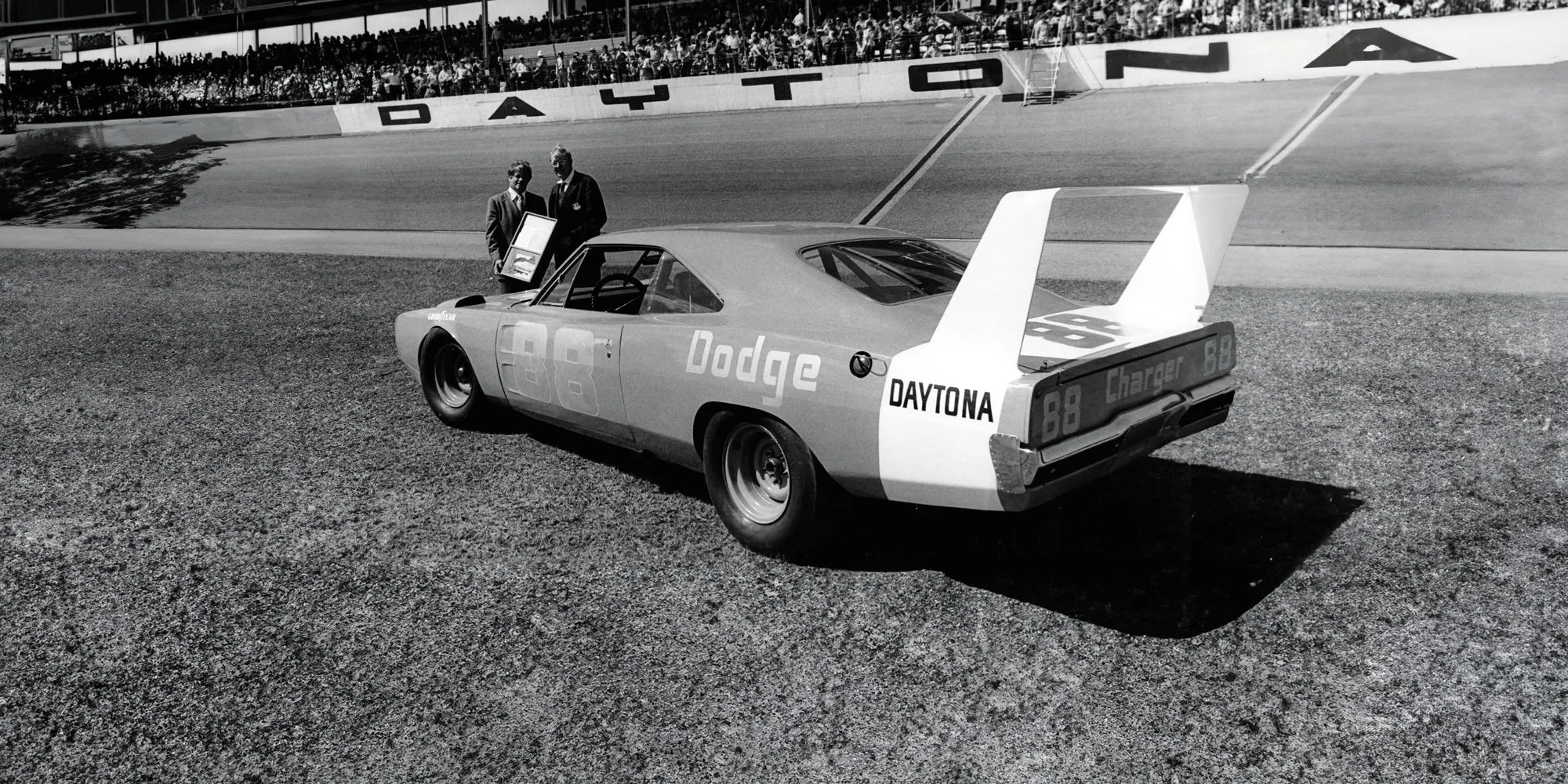
It started with Dodge and Plymouth engineering flush-mounted rear windows and tapered rooflines to cheat the air at Daytona and Talladega. Then came the noses — extended sheet-metal cones that made a Charger look like it was trying to become a jet fighter. And finally, the wings: towering rear spoilers that turned the back of a family sedan into something out of a wind-tunnel textbook.
The cars were absurd. They were also unbelievably fast. When they broke 200 mph on the big tracks, the sanctioning bodies started writing rules specifically to slow them down. But for those few seasons, the aero cars were the most exciting machines in motorsports — street-legal prototypes of pure speed, designed by engineers who understood that the difference between winning and losing was measured in fractions of a second and degrees of air resistance.
Today, the surviving aero cars are some of the most valuable and collectible machines in the hobby. They represent a time when factory racing programs had almost no limits and the cars reflected that freedom in every wild, impractical line.